


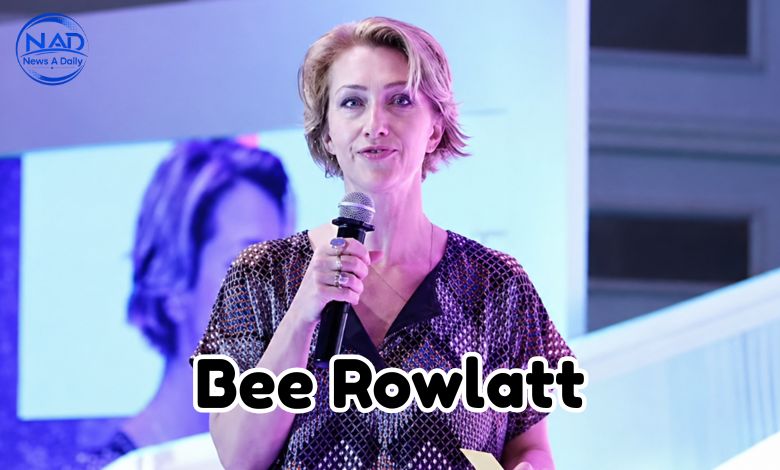
Bee Rowlatt is a British writer, broadcaster, producer, cultural events programmer and women’s rights advocate whose career has moved across journalism, literature, public history and feminist education. She is widely recognised for her long association with the BBC World Service, her thoughtful books on friendship, travel, feminism and literary history, and her public work connected with the legacy of Mary Wollstonecraft. What makes her career especially interesting is the way she connects storytelling with social purpose. Rather than treating books as private objects or history as something fixed in the past, Rowlatt uses literature as a way to open conversations about power, equality, memory and women’s place in public life. In 2025, she was awarded an MBE for services to women’s rights and women’s cultural contributions, a recognition that reflects not only her writing but also her wider role as an advocate, educator and cultural organiser.
Quick Bio
| Detail | Information |
|---|---|
| Full Name | Bee Rowlatt |
| Also Known As | Beatrice Rowlatt |
| Nationality | British |
| Profession | Writer, broadcaster, producer, cultural events programmer and women’s rights advocate |
| Known For | BBC World Service work, feminist writing, Mary Wollstonecraft advocacy and literary public speaking |
| Major Books | Talking About Jane Austen in Baghdad, In Search of Mary, One Woman Crime Wave |
| Key Focus Areas | Women’s rights, literature, feminist history, cultural education and public storytelling |
| Public Recognition | Awarded an MBE in 2025 for services to women’s rights and women’s cultural contributions |
| Associated Figure | Mary Wollstonecraft |
| Spouse | Justin Rowlatt, BBC Climate Editor |
Who Is Bee Rowlatt?
Bee Rowlatt is best understood as a multi-disciplinary public figure whose work cannot be placed neatly into one category. She has been a journalist, a radio professional, an author, a speaker, an events chair and a campaigner. Her writing includes cross-cultural non-fiction, travel literature, feminist essays and fiction, while her public work has involved festivals, talks, campaigns and educational projects. Many readers first encountered her through Talking About Jane Austen in Baghdad, the bestselling book she co-wrote with Iraqi academic May Witwit. Others know her through In Search of Mary, a travelogue and literary journey inspired by Mary Wollstonecraft. More recently, her novel One Woman Crime Wave has shown another side of her writing life, bringing her sharp interest in class, secrets and social behaviour into fiction. Across these different forms, the focus keyword Bee Rowlatt represents more than an author name; it stands for a body of work that links personal experience with wider cultural questions.
Early Career and BBC World Service Experience
A major part of Bee Rowlatt’s professional foundation came through her work with the BBC World Service, where she spent many years in broadcasting and international storytelling. That background is important because it helped shape the voice that later appeared in her books and public conversations. The World Service has traditionally required journalists and producers to think beyond national borders, to listen carefully to different viewpoints, and to explain complex human realities with clarity and fairness. Rowlatt’s later writing reflects many of those qualities. She is often interested in how women live through political change, how friendships cross borders, and how ideas travel across time and place. Her broadcasting experience also helps explain why she is an effective public speaker and event chair. She understands pacing, audience attention and the value of a well-asked question, skills that are visible in her festival appearances, interviews and cultural programming.
Books That Shaped Her Public Voice
The books associated with Bee Rowlatt show the range of her interests and the consistency of her values. Talking About Jane Austen in Baghdad, co-written with May Witwit, grew from a remarkable exchange between women living in very different circumstances. The book uses correspondence and literary conversation to explore friendship, fear, family, war and survival. It is not simply a book about Jane Austen or Iraq; it is a record of how books can become a bridge between people separated by geography and politics. In Search of Mary: The Mother of All Journeys took Rowlatt in another direction, following the footsteps and ideas of Mary Wollstonecraft, the 18th-century writer often described as one of the founding voices of modern feminism. In that work, Rowlatt combined travel, biography, motherhood, history and self-reflection, creating a book that was both personal and political. Her fiction, including One Woman Crime Wave, further expands her range, showing her ability to examine social tension through plot, character and wit.
Bee Rowlatt and Mary Wollstonecraft
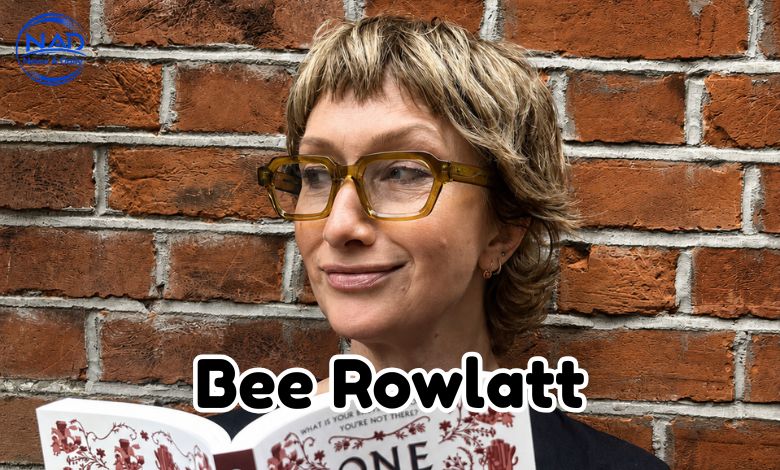
One of the most important parts of Bee Rowlatt’s public identity is her connection with Mary Wollstonecraft, the author of A Vindication of the Rights of Woman. Rowlatt has not only written about Wollstonecraft but has also worked to make her legacy more visible in public life. This matters because Wollstonecraft’s ideas about education, reason and women’s equality have shaped feminist thought for more than two centuries, yet her public recognition has often lagged behind that of male political and philosophical figures from the same period. Through her campaigning, writing and educational work, Rowlatt has helped bring Wollstonecraft into contemporary conversations about rights, representation and historical memory. Her involvement with the Mary Wollstonecraft campaign and the Wollstonecraft Society shows her belief that literary history should not remain confined to libraries and classrooms. For Rowlatt, history becomes meaningful when it inspires people to think differently about the present.
Cultural Programming and Public Events
Beyond books and broadcasting, Bee Rowlatt has built a strong reputation as a cultural events programmer and public speaker. She has appeared at major literary and cultural platforms, including international festivals, public talks and educational events. This part of her career is significant because cultural programming is not only about arranging speakers or filling a stage; it is about shaping public conversation. A good event programmer understands which ideas need space, which voices deserve attention, and how audiences can be invited into meaningful discussion. Rowlatt’s work in this field reflects her wider commitment to literature as a public good. Whether she is chairing a discussion, speaking about feminism or helping bring historical figures into modern debate, she works at the meeting point of books, politics and civic imagination. That is why her career has continued to grow beyond the identity of writer alone.
Women’s Rights Advocacy and Public Recognition
The 2025 MBE awarded to Bee Rowlatt recognised her services to women’s rights and women’s cultural contributions. This honour is important because it acknowledges the broader impact of her work outside the commercial world of publishing. Rowlatt’s feminism is not presented only as theory; it appears in campaigns, educational projects, public art, books, interviews and conversations that encourage people to reconsider whose stories are remembered. Her work around Mary Wollstonecraft is a clear example of this. By helping to bring attention to a woman whose ideas helped shape modern arguments for equality, Rowlatt has contributed to a larger effort to correct cultural imbalance. Her advocacy also shows how women’s rights work can happen through culture as well as law or politics. Literature, monuments, festivals and public education all influence how societies understand value, authority and memory.
A Career Beyond Famous Connections
Although some people know Bee Rowlatt through her marriage to BBC Climate Editor Justin Rowlatt, her own career stands firmly on its own. She has built an independent public profile through decades of creative and cultural work. Reducing her identity to a family connection would miss the depth of her achievements as an author, producer, broadcaster and campaigner. Her books have reached wide audiences, her events work has supported public debate, and her feminist advocacy has helped make women’s cultural contributions more visible. This independence is central to understanding her career. Rowlatt’s work is not defined by proximity to another public figure; it is defined by her own sustained interest in stories, justice, women’s voices and the power of culture to change how people think.
Writing Style and Themes
The writing of Bee Rowlatt often combines intelligence with warmth. She is interested in ideas, but she does not write as though ideas belong only to specialists. Her work frequently begins with human experience: friendship, travel, motherhood, danger, curiosity, ambition or anger. From there, she opens the subject outward into history, politics and society. This makes her writing accessible without making it shallow. She can write about feminist history while still paying attention to humour, uncertainty and everyday life. She can explore literary figures without turning them into distant statues. Her best-known themes include women’s independence, cross-cultural friendship, the survival of ideas, and the relationship between private life and public change. These themes give her work a distinctive voice in contemporary British literary culture.
Why Bee Rowlatt Matters Today
Bee Rowlatt matters because her career shows how literature can remain active in public life. In an age when attention is often fragmented and public debate can feel rushed, she returns readers and audiences to deeper questions: whose stories are remembered, whose voices are missing, and how can the past help us understand the present? Her work around Mary Wollstonecraft is especially relevant at a time when debates about gender equality, education and representation continue across the world. Rowlatt does not treat feminism as a closed chapter or a slogan. She treats it as a living conversation shaped by books, friendships, journeys, institutions and public memory. That ability to connect the intimate with the historical is one of the reasons her work continues to resonate.
Conclusion
Bee Rowlatt has created a career that brings together writing, broadcasting, cultural programming and women’s rights advocacy. From her years with the BBC World Service to her books on cross-cultural friendship and feminist history, from her work on Mary Wollstonecraft’s legacy to her recognition in the 2025 New Year Honours, she has shown how storytelling can become a form of public service. Her importance lies not only in the books she has written but in the conversations she has helped create. By connecting literature with activism and history with contemporary life, Bee Rowlatt has become a distinctive voice in British culture and a powerful example of how writers can help shape public understanding.
Read this too: Natalie Cornah: The Trusted Voice of BBC South West and the Lasting Value of Regional Journalism
(FAQs)
Who is Bee Rowlatt?
Bee Rowlatt is a British writer, broadcaster, producer, cultural events programmer and women’s rights advocate known for her books, BBC World Service background and public work connected with Mary Wollstonecraft.
What books has Bee Rowlatt written?
Bee Rowlatt is associated with books including Talking About Jane Austen in Baghdad, In Search of Mary: The Mother of All Journeys, and the novel One Woman Crime Wave.
Why is Bee Rowlatt connected to Mary Wollstonecraft?
Bee Rowlatt has written about Mary Wollstonecraft and has worked publicly to promote her legacy through campaigns, events and educational projects focused on women’s rights and cultural memory.
Did Bee Rowlatt receive an MBE?
Yes, Bee Rowlatt was awarded an MBE in the 2025 New Year Honours for services to the promotion of women’s rights and women’s cultural contributions.
Why is Bee Rowlatt important?
Bee Rowlatt is important because she connects literature, feminism, broadcasting and public education, helping bring women’s history and cultural contributions into wider public conversation

